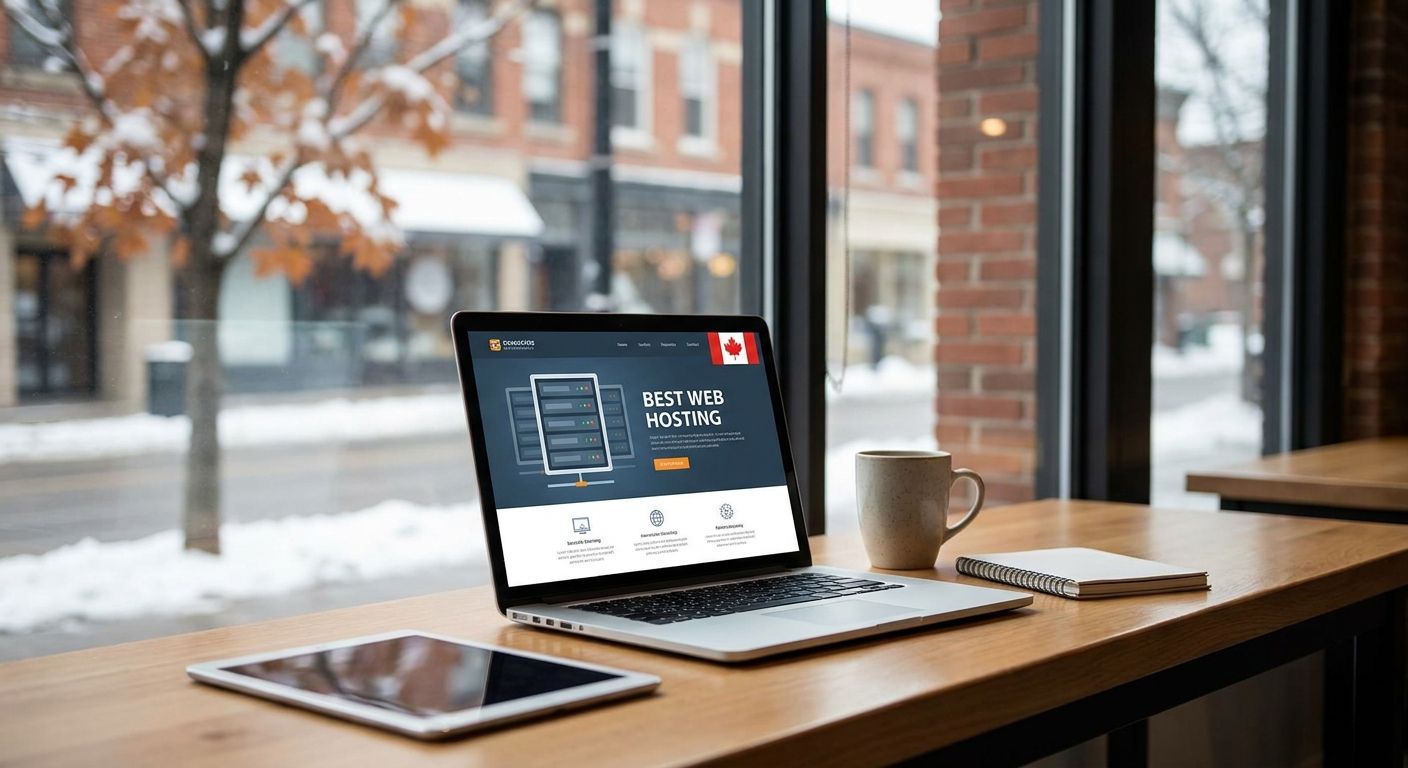
Six platforms show up in every "best website builder" search for Canadian small businesses, and only one of them is built specifically for a business that plans to outgrow a template. Best overall for growth-focused Canadian businesses: a custom-built site from a studio like BL3SSED. Best for ecommerce and DTC: Shopify. Best budget DIY option: Wix. Best for content-heavy blogs and publishers: WordPress.
- Among the best website builders for Canadian small businesses, Shopify wins for ecommerce in 2026 - buy it if you sell physical product.
- Wix and Squarespace suit solo operators who need a live site fast on a small budget.
- WordPress fits content-heavy sites; Webflow suits teams wanting design control without full code.
- A custom-built site from BL3SSED wins long-term for businesses that have outgrown templates.
Why this matters
A Canadian small business site has to do more than look good. It needs CAD checkout that doesn't confuse a customer with US tax formatting, contact and privacy language that holds up under PIPEDA, and page speed that doesn't tank your ranking against competitors using faster infrastructure. Most DIY builders were designed for a global audience first and a Canadian small business second.
That gap is where BL3SSED does most of its work - taking businesses off a template that's starting to show cracks and putting them on something built for how they actually operate. This list ranks the six real options a Canadian founder or operator will run into in 2026, including where a template is genuinely the right call.
What makes the best website builder for a Canadian small business
- Design flexibility - can the site look distinct, or does it look like every other template on the platform
- Ease of updates - can non-technical staff change a price, a photo, or a headline without calling someone
- Canadian payment and tax support - native CAD checkout, GST/HST-ready invoicing where it applies
- Page speed and technical SEO - clean code, fast load times, no bloated app stacks dragging performance
- Scalability - does the platform grow with the business, or force a rebuild in two years
- Total cost of ownership - the monthly fee is never the full cost once apps, plugins, and maintenance are counted
Website builders for Canadian small businesses at a glance
| Platform | Best For | Standout Feature | Key Limitation |
|---|---|---|---|
| Custom build (BL3SSED) | Growth-focused businesses needing brand + system control | Built to the business's exact funnel and brand, not a template | Requires a project engagement, not instant self-serve |
| Shopify | Ecommerce and DTC brands | Native checkout and inventory tools | Non-store content feels bolted on |
| Squarespace | Solo service businesses wanting fast, design-forward sites | Templates built by designers, minimal setup | Limited third-party app ecosystem |
| Wix | Very small budgets and first-time site owners | Drag-and-drop editor, no code needed | Gets slow and hard to migrate off later |
| WordPress (self-hosted) | Content-heavy sites and blogs | Full ownership, largest plugin ecosystem | Needs ongoing maintenance and security updates |
| Webflow | Design-conscious teams wanting visual control | Visual builder with production-grade code output | Steeper learning curve for non-designers |
1. Custom-built by BL3SSED: best website builder alternative for growth-focused businesses
A custom build isn't a platform you sign up for - it's a site designed and coded around your brand and your funnel, not fitted into someone else's template grid. BL3SSED builds web design, brand identity, and the digital infrastructure (forms, tracking, integrations) as one connected system rather than three separate purchases.
BL3SSED custom build pros:
- Full control over design, code, and how the brand looks across every page
- Systems (booking, forms, CRM handoff) wired to actually move a visitor to a paying customer
- No template lock-in and no fighting a page builder's limitations
- Built with the same infrastructure thinking whether the business sells services or products
BL3SSED custom build cons:
- It's a project engagement, not an instant sign-up-and-go tool
- Cost scales with scope, so it needs a real conversation before committing
- Overkill for a business still validating an idea rather than scaling one
Best for: businesses that have outgrown a template and need a site built around how they actually sell. Verdict: Buy if you're past the "just get something live" stage.
2. Shopify: best website builder for ecommerce and DTC brands
Shopify is a hosted ecommerce platform built around product catalogs, checkout, and inventory. It processes payments in CAD natively and has the deepest app ecosystem for shipping, tax, and fulfillment of any platform on this list.
Shopify pros:
- Native CAD checkout and strong Canadian payment processing
- Massive app ecosystem for shipping, tax, and inventory management
- Scales well as SKU count and order volume grow
Shopify cons:
- Non-store content - blog, brand story, about pages - feels secondary to the storefront
- App costs stack up fast once you need more than basic functionality
- Deep checkout customization usually needs a developer
Best for: any Canadian business selling physical product online. Verdict: Buy if ecommerce is the core of the business.
3. Squarespace: best website builder for solo service businesses
Squarespace is a hosted builder known for design-forward templates aimed at service providers, creatives, and small portfolios. It gets a decent-looking site live fast without touching code.
Squarespace pros:
- Templates built by actual designers, not generic drag-and-drop blocks
- Built-in blog, gallery, and booking tools cover most solo-operator needs
- Reasonable default SEO settings out of the box
Squarespace cons:
- Flexibility hits a ceiling once brand needs get more specific
- Smaller third-party app catalog than WordPress or Shopify
- Ecommerce tools are noticeably weaker than Shopify's
Best for: a solo service business that needs a clean site live this month. Verdict: Hold - fine to launch on, but watch for the ceiling as you grow.
4. Wix: best website builder for first-time site owners on a tight budget
Wix is the most beginner-friendly drag-and-drop builder on this list, with AI-assisted design tools that get a basic site online without any code.
Wix pros:
- Fastest path from zero to a live website
- Huge template library across nearly every business type
- AI design assist speeds up the initial build
Wix cons:
- Sites can get bloated and slow as more sections and apps get added
- Migrating off Wix later usually means rebuilding from scratch
- Looks less credible once you're competing against businesses with a distinct brand
Best for: testing a business idea before investing in something permanent. Verdict: Wait - good for validation, not for running the business long-term.
5. WordPress (self-hosted): best website builder for content-heavy sites
WordPress is open-source software you host yourself or through a managed host, and it still runs a large share of content-first websites in 2026 because nothing else matches its plugin depth for blogging, SEO, and membership tools.
WordPress pros:
- Full data ownership with no platform lock-in
- Largest plugin ecosystem for SEO, forms, and content management
- Works for anything from a simple blog to a full publication
WordPress cons:
- Needs ongoing maintenance and security patching
- Site quality varies wildly depending on theme and plugin choices
- Non-technical owners often need a developer eventually anyway
Best for: blogs, publishers, and content-heavy small businesses. Verdict: Buy if content volume is the priority.
6. Webflow: best website builder for design-conscious teams
Webflow is a visual builder that outputs production-grade code, popular with design teams that want pixel-level control without hand-coding every page.
Webflow pros:
- Genuine design control most drag-and-drop tools don't offer
- Fast page speed compared to bloated builder platforms
- Hosting and a built-in CMS come with the platform
Webflow cons:
- Steeper learning curve than Wix or Squarespace
- CMS structure needs real planning before you start building
- Cost climbs as traffic and CMS item counts grow
Best for: design teams that want visual control without writing code from scratch. Verdict: Hold - a strong tool if you budget for the learning curve.
How we ranked these
Each platform got measured against the same six criteria: design flexibility, ease of updates, Canadian payment support, page speed, scalability, and total cost of ownership. The custom build ranks first because it's the only option built around a specific business rather than a shared template - everything below it is a trade-off between speed-to-launch and long-term flexibility.
“A website builder gets you online. A system gets people to act once they're there.”
Ready to move past a template?
See what a system built around your business actually looks like.
Which website builder should you choose?
If you sell physical product, Shopify is the default in 2026 - its Canadian checkout and shipping tools are hard to beat. If your business runs on content, WordPress still wins on flexibility and ownership. If you just need something live this week to test an idea, Wix or Squarespace get you there without a big commitment. If you've already validated the business and the current site is holding back growth instead of driving it, that's the point to stop patching a template and build a system - which is exactly where BL3SSED comes in.
FAQ
What's the best website builder for a Canadian small business in 2026?
It depends on what the business sells. Shopify is the best website builder for Canadian ecommerce, WordPress wins for content-heavy sites, and a custom build fits businesses ready to move past a template entirely.
Is Shopify better than Wix for a Canadian store?
Yes, for anything selling physical product. Shopify's checkout, inventory, and CAD payment handling are built for ecommerce specifically, while Wix is a general-purpose site builder with weaker store tools.
Do Canadian businesses need a website with CAD checkout and GST/HST-ready invoicing?
Yes if the business processes payments or issues invoices directly through the site. A checkout defaulting to US tax formatting or currency confuses Canadian customers and creates avoidable friction at the point of sale.
Is WordPress still worth using in 2026?
Yes, particularly for content-heavy businesses and publishers. Its plugin ecosystem for SEO and content management still outpaces closed platforms, though it requires ongoing maintenance a hosted builder handles for you.
Can I switch from Wix or Squarespace to a custom website later?
Yes, but expect a rebuild rather than a migration. Content, design, and structure usually don't transfer cleanly out of a closed builder, so most businesses treat the move as starting fresh with an agency.
What's the difference between a website builder and a custom-built website?
A website builder gives you a template and a set of pre-built blocks to arrange. A custom build is designed and coded around your specific brand, funnel, and systems from the ground up.
Is Webflow good for a small business?
It's good for small businesses with design ambitions and someone willing to learn the platform. Webflow gives more visual control than Wix or Squarespace but takes longer to set up correctly.
One last thing
Before picking any website builder, check how many taps it takes a first-time visitor on mobile to find your phone number or contact form. That single detail matters more than any template's design score, and it's the first thing worth auditing on a site that was handed over from a DIY builder rather than built as a system.